Take a Stroll Through “Wild at Heart: Ernest Thompson Seton”

July 15th, 2010 by Kate Nelson

America’s forgotten conservationist, Ernest Thompson Seton, is celebrated in the History Museum exhibit Wild at Heart: Ernest Thompson Seton. Today, let’s take a short walk through the exhibit, supplemented by what you’ll read and what you’ll see. (All photos are by Blair Clark, New Mexico Department of Cultural Affairs.)

As you head upstairs to the Albert and Ethel Herzstein Changing Exhibitions Gallery, you’ll quickly notice something’s afoot: Hey, there are wolves on the walls!

outside - wolves on wall

Upon entering into the (air-conditioned!) cool, we get our first introduction to Seton.

entrywayIn 1893, on the winter plains of New Mexico, a drama played out between a wolf pack and a wolf hunter named Ernest Thompson Seton. Through his interaction with the wild canines, Seton underwent a personal transformation, changing from their persecutor to their protector, becoming a leading proponent of wildlife conservation. Seton reached an international audience of millions through his drawings, paintings, books and lectures. He wrote the first realistic animal story and established important principles for the sciences of animal behavior and ecology. His passion for self-reliance, ethics, and outdoor youth education led him to become a founder of the worldwide Boy Scout movement. Seton’s insights sparked a revolution in our perceptions of wild nature, provided a model for environmentalism, and inspired generations of youths and adults to take to the outdoors for recreation, adventure, and solace.

Heading counter-clockwise, we learn of Seton’s background and his first foray into New Mexico.

wolf photoOn October 22, 1893, 33-year-old Canadian naturalist and artist Ernest Thompson Seton arrived in Clayton, New Mexico. He had been hired to hunt wolves. As buffalo, antelope and deer had been eliminated through hunting and habitat loss, wolves turned to killing cattle. They threatened the livelihood of ranchers. For the next three months as Seton rode the rangeland of Union County, he thought a great deal about wilderness, wildlife and our relationship to the land. The wolves he hunted were becoming his teachers. Seton hunted a wolf pack along the Corrumpa Creek (“Currumpaw”) which flows east from Capulin Volcano National Monument, an ideal area for wildlife. He wrote: “The place seemed uninviting to a stranger from the lush and fertile prairies of Manitoba, but the more I saw of it the more it was revealed as a paradise.”

The gray wolf (Canis lupus) likely lived in this area for thousands of years. Seton found that wolves in northern New Mexico could weigh up to 100 pounds, although most weighed less, reaching the size of German shepherd dogs. In 1974, the U.S. Fish and Wildlife Service listed the gray wolf as “Endangered” in the lower 48 states and Mexico. Listing and attempts at de-listing wolf populations have remained contentious issues over the decades.

Seton’s effort to kill a wolf he named “Blanca,” then her mate, the pack-leader “Lobo,” turned into a horrific experience, one that left him asking, in his nature journal, “Why?” He never killed another wolf, returning instead to his home in Toronto, where he wrote a story about the hunt in which he cast himself as the villain. Lobo and Blanca – capable of courage, honor, and love – became the heroes. The story, “The King of Currumpaw,” began to change the way North Americans viewed wildlife, and marked an important turning point for the wildlife conservation movement.

a great grizzly form rose upFrom “The King of Currumpaw”:

As I drew near a great grizzly form arose from the ground, vainly endeavoring to escape, and there revealed before me stood Lobo, King of the Currumpaw, firmly held in the traps. Poor old hero, he had never ceased to search for his darling, and when he found the trail her body had made he followed it recklessly, and so fell into the snare prepared for him…Yet, when I went near him, he rose up with bristling mane and raised his voice, and for the last time made the cañon reverberate with his deep bass roar, a call for help, the muster call of his band. But there was none to answer him…

For the next 10 years, Seton combined intense wildlife study with developing a close relationship with Canada’s First Nations peoples. When not traveling, he lived in Toronto or New York City, developing his career as an illustrator and naturalist. He also began writing short fiction and natural history observations. He would later publish around 40 books that would sell more than 2 million copies.

artist and illustratorSeton published articles and monographs on wildlife from an early age. “Roger Tory Peterson freely acknowledges that the idea for his now familiar technique of identifying birds in the field came from Seton…In this way, Seton provided some of the impetus that has led to the present era of enjoyment and understanding of birds.” Robert W. Nero, American Ornithologists’ Union, 1975.

Seton gained increasing recognition for his illustrations and stories about wildlife throughout the 1890s. He used this celebrity to become a leading advocate for preservation of all wild creatures. Like Henry David Thoreau, he believed that the continued existence of wild nature was vital to our own survival on both a physical and moral level.

“There will always be wild land not required for settlement; and how can we better use it than by making it a sanctuary for living Wild Things that afford pure pleasure to all who see them?” Lives of the Hunted, 1901

By 1905, Seton was one of the most popular lecturers in the United States, Canada, and England. He also turned his attention to creating scientific works. Combining his knowledge of mammalogy, ecology, and ethology (animal behavior) and study with native peoples, his first major nonfiction work, Lives of Northern Animals, won immediate acclaim from biologists.

In 1900, Seton purchased a woodland estate near Greenwich, Connecticut, naming it Wyndygoul, for a Seton family estate in Scotland. It was subject to occasional vandalism by local boys. Instead of calling in law enforcement, Seton invited his young antagonists to join him for a weekend campout on March 28-29, 1902. Seton told compelling stories of the West and taught them the basic skills of “Woodcraft.”

treesHe ran a more formal weekend camp at Summit, New Jersey at the beginning of July. At the same time, he wrote a six-part series for Ladies’ Home Journal, “Ernest Thompson Seton’s Boys.” Thousands of boys joined what became known as the “Woodcraft” movement. The camps and articles established principles of outdoor education influencing the programming of summer youth camps for the next century. His main intent was to help youths connect with nature — an aim the History Museum shares in both the design of the exhibit’s interior space with trunks from real aspen trees (where story-tellers will enthrall children and families in upcoming events) and its supplemental programs that include an urban bird hike and nature-journaling workshops.

Other men took notice of Seton’s success with the “Woodcraft Indians.” Daniel Carter Beard (American boys’ writer and artist) announced the formation of the rival organization, “Sons of Daniel Boone,” in April 1905.  Robert Baden-Powell (British hero of the Second Boer War in South Africa) organized an experimental camp for boys in England in 1908, based in part on the Seton model. He called his organization the Boy Scouts.

Both Beard and Baden-Powell freely adopted many of Seton’s ideas, often without giving Seton credit. Over time, Seton’s Woodcraft movement faded while the Boy Scout movement thrived. Worldwide, more than 350 million boys, girls, and their families have taken part in Scouting over the past century.

furnitureAs part of his own efforts through Woodcraft, Seton made illustrations and items to show Scouts and Woodcrafters how to make their own items. He handcrafted a number of items for his own use.

Seton wrote and edited an edition of Boy Scouts of America, Handbook for Boys on display in the exhibit. In it, he combined his Woodcraft writings with the Scout writings of Baden-Powell. The Boy Scout Handbook has been issued in many subsequent editions over the past century with millions of copies printed.

On February 8, 1910, businessman and newspaper owner W. D. Boyce incorporated the Boy Scouts of America. On June 21, Edgar M. Robinson of the YMCA became the temporary head of the organization. He recruited Seton as its most public standard-bearer. Beginning on August 16, Seton led the first official camp of the Boy Scouts of America at Silver Bay, New York. Shortly afterward, Seton was given the honorary title, Chief Scout. He worked tirelessly to establish Scouting as an American institution.

Though Seton eventually parted ways with the Boy Scouts, he remained a tireless champion of outdoors education for youths and for conservation. Some of that work can be seen every summer in Cimarron, N.M., where Boy Scouts gather at the Philmont Scout Ranch.

Beginning in 1930, Seton built a “castle” outside of Santa Fe on what he thought of as “The Last Rampart of the Rockies” and what is still known today as Seton Village. The castle burned down during its renovation by the Academy for the Love of Learning, our partner in this exhibit, but the Academy is offering tours of its ruins, along with Seton-related programming on three dates. The first, Aug. 14, coincides with Seton’s 150th birthday and includes tales around a campfire.

Seton died in Santa Fe on October 23, 1946, almost exactly 53 years after his first trip to Clayton. In all that time, Seton had never forgotten the King of Currumpaw. By forcing Seton to ask WHY, Lobo helped him on his journey from wolf killer to student of the Buffalo Wind. Seton made a transformation within himself, putting the best of what he had learned to work its way in the world – where it is working still. As you leave the exhibit, we ask you to ponder this:

Seton would urge you to experience wild nature: Photograph wildlife. Draw the landscape. Write journal entries about your feelings for glorious outdoors New Mexico. And always, keep the love of learning alive!

NEH Teachers Take Up NM Crafts

June 24th, 2010 by Kate Nelson

NEH teachers - retablos 2The Palace Courtyard was cool, with a reasonable amount of shade this morning — a far cry from the lightning storm predicted for later today. A perfect time, in short, to try out a little plein air painting, New Mexico-style. The teachers participating in this week’s NEH-UNM program, “Contested Homelands: Knowledge, History and Culture of Historic Santa Fe,” ditched the lecture tables in favor of some hands-on activities: creating retablos and punched-tin frames, under the guidance of two notable New Mexico artists.

Santero Gabriel J. Vigil is a Raton native who gave up dreams of professional boxing to build an artist’s career in Santa Fe. Winner of multiple awards for his retablos and bultos at Spanish Market, he hasn’t forgotten his roots and regularly works with children, passing along his art skills to them. Thanks to that experience, he likely had a few tricks up his sleeve when he set out to teach our teachers. He gave them a few hints, provided some drawings for them to work off of, then set them loose.

The results? Soulful and stirring.

A group of teachers in the NEH-UNM workshop enjoy painting retablos on a cool Santa Fe morning.

A group of teachers in the NEH-UNM workshop enjoy painting retablos on a cool Santa Fe morning.

A sacred heart design takes wing.

A sacred heart design takes wing.

Inside the Palace, another group of teachers created a din usually reserved for construction sites. Cleo Romero, a Nambe-based artist, showed them a selection of her punched-tin work — which, in 2006, won top honors in Santa Fe’s Spanish Market. With the assistance of some patterns, nails and hammers, she let the participants work off any potential aggressions by pounding out their own creations.

NEH teachers - tinwork 2

Using a paper pattern, one of the teachers lines up her punched-tin design.

With Romero's works for inspiration (hanging, at right), teachers get to pounding.

With Romero's works for inspiration (hanging, at right), teachers get to pounding.

If any of that got you inspired,take note: Cleo will teach a free tinwork class next Wednesday from 10 am to 2 pm at the Museum of Spanish Colonial Arts. (Call 982-2226 for details.) For further inspiration, check out the online version of Treasures of Devotion; Tesoros de Devocion, the exquisite exhibit in the Palace of the Governors celebrating the work of New Mexico’s legendary santeros.

Whose Homeland Is It Anyway?

June 21st, 2010 by Kate Nelson

“Place is more than a museum. Place is more than stuff in a case. Place is an experience that is shared through connections with people over time.

With that, Erica Garcia, chief educator at the New Mexico History Museum, today began one of what will become many lessons for 40 kindergarten-through-high-school teachers. Gathered from across the nation at the museum this week (like a similar group last week), the teachers are studying the history and interactions between Native Americans and European settlers in a city where those peoples’ descendants still make history.

Erica Garcia (left) introduces teachers to the NM History Museum.

Erica Garcia (left) introduces teachers to the NM History Museum.

It’s also an education in how the settlement of America is not a story focused on familiar names like Jamestown and the Mayflower.

Contested Homelands: Knowledge, History, and Culture of Historic Santa Fe is a special program offered at the museum by the University of New Mexico’s College of Education. Funded by a $160,000 grant from the National Endowment for the Humanities, Contested Homelands consists of two weeklong workshops held at the museum, with field trips around Santa Fe and Taos.

“Getting a chance to learn about New Mexico’s history in a place that saw so much of it makes this workshop unique,” Garcia said. “The Palace of the Governors is a living testament to the resiliency of New Mexico’s people and cultures. You can tell people about the history, but something special happens when they stand in its footprint.”

Contested Homelands aims to strengthen the teachers’ knowledge of pre-colonial America and stretch their understanding about the scope of European Colonial America – a topic that too often is taught as an east-to-west migration, overlooking the contemporaneous movements of Spanish colonists from south to north. Besides hearing distinguished scholars discuss topics ranging from historic sites to El Camino Real, participants get to try their hands at cultural creation, hammering out tinwork and designing their own retablos.

Garcia talks about the design of the Palace of the Governors during a walk around the Santa Fe Plaza.

Garcia talks about the design of the Palace of the Governors during a walk around the Santa Fe Plaza.

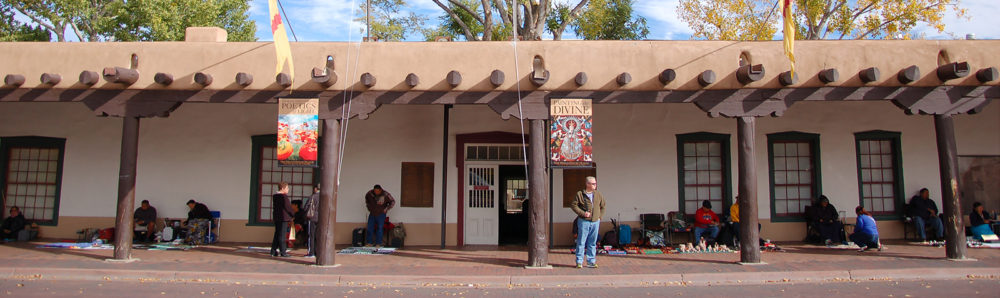
As this week’s session began, Garcia led the teachers on a tour of the Santa Fe Plaza and the Palace of the Governors. Standing at the corners of Lincoln Avenue and San Francisco Street, she noted that the corner, once the terminus of El Camino Real, is now “a great place to get ice cream.” Moving down the sidewalk to the corner of Old Santa Fe Trail and San Francisco Street, she told the teachers they had just reached the end of the Santa Fe Trail.

The Plaza that connects the trails, she said, has been the heart of Santa Fe life for four centures, with  wedding, executions, protest rallies, military enlistments and, just this weekend, a few nude cyclists.

Sprinkled in were stories of the Spanish colonization and its harsh encomienda system that led to the Pueblo Revolt; the technology of building with mud; and a nod to the Palace’s uniquely colonial security system: Anyone intending to storm the place was forced to simultaneously stoop through a low door while stepping up, thereby making themselves a slower and better target of inhabitants.

This week’s teachers hail from places as far from one another as Maine and Oregon, with Iowa, Chicago, the Carolinas, New Jersey, New York and San Antonio thrown in.

Among the questions participants will ponder: What are homelands? How do homelands stretch, shrink and shift over time? What happens when homelands overlap with one another? How does (perpetual) colonization, conquering, and resistance transform homelands and create new ones? What is the spiritual story of a homeland? How do the artistic products and structures of a homeland tell a story? What connections do people have to a homeland and how are these connections manifested in history and in present-day? And importantly, for the purpose of this workshop, how do the Camino Real and the Palace of the Governors exemplify the unfolding of homeland in an area that already had a vibrant system of Pueblo communities prior to European Settlement?

Using what they learn, the teachers will leave the workshop with something they can use in their classrooms – a lesson, a Power Point Presentation, an informational booklet to share with their students, a lecture.

Besides UNM and the museum, the program received support from the Office of the State Historian, Spanish Colonial Arts Society, Wells Fargo Bank, Albuquerque Historical Society, New Mexico Humanities Council, New Mexico Council for the Social Studies, National Geographic, La Montañita Coop, Dr. Thomas Keyes, Dr. Quincy Spuirlin, Dr. Rebecca Sánchez and Albert and Christine Sánchez.

While the workshops coincide with Santa Fe’s 400th anniversary, they make the point that the area’s history stretches centuries before that.

“Vibrant communities flourished in this place long before European exploration and later settlement,” Assistant Professor Rebecca Sánchez told UNM Today. “ As this region moved toward statehood, the United States inherited the memory and material creations of the region. When it became part of the U.S., the country had to incorporate this history into the national narrative of American history. The place is itself a homeland with a larger story.”

The NEH’s “Edsitement” arm has also selected Santa Fe for this month’s virtual excursion, an online opportunity for teachers and, really, anyone to learn more about this place where so many trails converged.

New Mexico Turquoise Meets Tiffany’s Fabulous Blue Box

June 3rd, 2010 by Kate Nelson

tiffany boxFor as long as people have called New Mexico home, they have pulled gems and minerals from its soil. Today, that tradition yields oil, gas, coal, uranium, and always, the gems that decorate our jewelry. Primary among those gems is a a hydrated phosphate of copper and aluminum known worldwide as turquoise.

For that part of the story, head with us to the hills of Cerrillos, south of Santa Fe, where a once-vibrant mining district held a special allure to famed jewelry company Tiffany’s. All because of a particular type of turquoise and that fabled Tiffany Blue box.

The Cerrillos mining district has seen activity since 600 A.D., first from Native peoples, then Spanish colonists and, later, American mining companies. But the history of turquoise mining wasn’t always a cherished one. From the Cerrillos Hills web site:

During the Spanish Period the pueblos continued to mine turquoise for their own use and trade with the unconquered tribes around New Mexico. The Spanish considered turquoise worthless and laughed at the Indians for mining it. Consequently, Spanish documents …  ignore the continued mining of turquoise by the Indians. Only a few Spanish documents even mention the continued use of turquoise by the pueblos.

Late 1800s documents make references to Santo Domingo and Cochito Puebloans traveling to the Cerrillos Hills to collect turquoise. With the arrival of the railroad in 1881 and the development of tourism, travelers began snapping up Pueblo turquoise jewelry. A fad was being born.

In 1889, George F. Kunz, Tiffany & Co.’s renowned gemologist, won an award in Paris for a collection that contained a sample of New Mexico turquoise. In 1892, Kunz announced that certain colors of turquoise had come to be considered “gem quality” – namely, the Tiffany Blue color.

tiffany pendantAccording to a New York newspaper: That is a turquoise far and away the finest in America, and it came from these new mines in New Mexico. It is worth $4,000. … (I)t is probable that gems to the value of $200,000 a year may be obtained from this mine. Kunz recognized the possibilities of further branding the Tiffany Blue color by maintaining almost-exclusive rights to the turquoise he had made suddenly valuable.

That year, James P. McNulty came to Cerrillos to mine turquoise, eventually landing with the American Turquoise Company, which owned the claims to a number of mines. The ATC sold almost all of its turquoise directly to Tiffany & Co., where designer Pauling Farnham (regarded by some as “Tiffany’s lost genius”) crafted some $2 million worth of it into jewelry.

McNulty died Jan. 26, 1933, and is buried in the Masonic section of the old cemetery on Cerrillos Road in Santa Fe.

Herculano Montoya at the Tiffany mine(1937). Palace of the Governors Photo Archives

Herculano Montoya at the Tiffany mine(1937). Palace of the Governors Photo Archives

Today, the Tiffany Mine and with five other mines in Cerrillos are owned by Doug Magnus, a Santa Fe jewelry designer whose Santa Fe 400th line is available in the Spiegelberg Shop at the New Mexico History Museum.

Magnus says the mines are, in all likelihood, played out. Still, he was able to obtain several specimens of the raw ore “that had been hoarded for 80 or 100 years by the man that did all the mining for the American Turquoise Company.”

Despite such difficulties, Magnus said, turquoise seems to be enjoying new verve. “I’ve been working with it since 1972, and I’ve watched it become the single most popular semi-precious gemstone in the realm of semi-precious gemstones. And that’s worldwide.”

Magnus will talk about the mines and about the use of turquoise in jewelry-making at the 5th annual Palace of the Governors Gem & Mineral Show, 9 am-5 pm, June 18-20, in the Palace Courtyard. The event is free via entrance through the Blue Gate south of the History Museum’s main entrance at 113 Lincoln Avenue.

Miners, merchants and jewelers will display (and sell!) specimens ranging from raw ore to polished finery.

Guest speakers at the event:

Garrick Beck, “The History of Fakery in Gemstones,” 11 am Saturday

Beck’s Santa Fe company, Natural Stones, specializes in genuine, natural stones that are not dyed, synthesized, “stabilized” or “enhanced.

Doug Magnus,”The Cerrillos Mines,” 2 pm Saturday

Magnus, a Santa Fe jewelry designer whose Santa Fe 400th line is available in the Spiegelberg Shop at the New Mexico History Museum, has owned the six mines in Cerrillos, N.M., including the fabled Tiffany turquoise mine, since 1988.

Sandy Craig,”The Opals of Ethiopia,” 1 pm Sunday

Craig’s Orca Gems and Opals of Littleton, Colo., carries specimens, rough, rubs and cut stones from Nevada, Mexico, Honduras, Ethiopia, Lightning Ridge, Lambina, Mintabi, Yowah and Koroit.

Lila with crystal 5x3 72The Gem & Mineral Show, in conjunction with the Palace of the Governors Native American Artisan Program, allows gem and mineral dealers and Native American artisans to tell their unique stories about the historical relationships that have existed between Native silversmiths and jewelers, miners, and gem and mineral traders.

Exhibitors will include: Garrick Beck; Orca Gems and Opals; Roadrunner Mining and Minerals; Bright Star Gemstones; and Will Steerman.

Come to look, come to touch, come to buy, but most important, come to learn more about the historic interplay between miners, mineral traders and the artisans who bring life to these fruits of the earth.

How One Wolf Changed a Nation

May 21st, 2010 by Kate Nelson

013783-400dpi Clayton, New Mexico 1890s HIstory Library CH1By the time Ernest Thompson Seton arrived in Clayton, N.M., in 1893 as a hired gun to kill wolves, nearly all the wolves were dead. Post-Civil War New Mexico had welcomed an influx of cattle ranchers and sport hunters who saw the gray wolf as a varmint, a nuisance, something easily expendable with poison, a bullet or a rope.

The wolves that survived had grown cunning. They abandoned hunting in daylight, lest they become the hunted. They not only shunned the strychnine-laced meat that Seton left for them, but carried it away and hid it under debris. They avoided his steel traps, yet left bold footprints around his stone cabin at night.

The steps that Seton would eventually take to kill six wolves turned his path back on itself, recreating Seton as one of the leading conservationists of his time.

This weekend, the History Museum opens the exhibit Wild at Heart: Ernest Thompson Seton, celebrating the life of this artist, author and co-founder of the Scouting movement. On Thursday, May 20, guest curator David L. Witt, author of Ernest Thompson Seton: The Life and Legacy of an Artist and Conservationist (Gibbs Smith, 2010), spoke at the Fray Angélico Chávez History Library’s Brainpower & Brownbags lecture series.

Witt at B&B lectureHe only had an hour, so Witt chose to focus on that pivotal year, beginning in 1893, when Seton brought his wolf-hunting skills to New Mexico: “At thirty-three, he almost certainly had more blood on his hands than anyone else in Clayton. None of it was human,” Witt writes in the book.

As he began his lecture, Witt warned the 35 attendees that “there are some dark parts; it’s about wolves. But it has a happy ending,” he added, “though not necessarily for the wolves.”

As Seton tried and failed in his early New Mexico hunts, he spent his free time studying the wildlife he could find – primarily, kangaroo rats – and ended up becoming one of the first scientists to publish drawings of the rats and their burrows.

(Also during that eventful year, he inadvertently invented a cattle brand for rustlers needing to re-burn the flanks of their stolen goods to camouflage the original brand. His explanation was that, as an artist, he was kindly answering some questions of a man whom he later discovered was a cattle-thief.)

Seton’s Calvinist upbringing also drew him into doubt in New Mexico – namely the religious belief that children are born in “total depravity” and must be made “good.” Seton decided he had always believed children were born good, and more important, could be kept on their own higher path by nurturing a bond with the great outdoors – thus planting the seed that would eventually become the Boy Scouts of America.

Lobo in the four traps, taken by ETS January 1894 Philmont collection CH1_edited-1Wolf blood would yet be spilled before Seton’s great transformation would take place. The story of how Blanca and Lobo died is a difficult one, Witt acknowledged in his lecture. He described the manic, melancholy howling of Lobo after Blanca was killed. He took care to give the audience only brief glimpses of either wolf in their fatal traps (the black wolf “Lobo” in his trap, at left).

The death of Lobo sparked in Seton an internal debate based on this question, Witt said: “Why do we as humans carry on this war against nature … destroying habitat and species?

“He spent the rest of his life trying to answer that question,” Witt said.

The exhibit explores how he answered it, in his literary and scientific output, in his art, in his studies of Native peoples, in the summer camps he established in Connecticut and Santa Fe that, in 1910, became the Boy Scouts, with Seton as co-founder. He became a man who today ranks among the likes of John Burroughs and John James Audubon, with a distinctly New Mexico twist.

We hope this exhibit inspires visitors to take a fresh look at their own relationship to the natural world — in part by acknowledging the matters that are dark and violent, and in another part by celebrating those that bring us joy. (Below, White-Winged Crossbills, oil on academy board, 1883, courtesy of the Academy for the Love of Learning.)

White-winged Crossbills 3x4

As Witt writes:

New Mexico provided Ernest Thompson Seton with the environment he required for deep spiritual reflection, first in the winter of 1893, and then again in the 1930s and up to the end of his life. Ever present in that process was his keenly felt responsibility for causing the death of Lobo. The King of Currumpaw, specimen #677, a seventy-eight-pound male gray wolf of the semi-arid grasslands, had, in his way, worked a kind of magic. By forcing Seton to ask “WHY?” Lobo helped him on his journey from wolf killer to student of the Buffalo Wind. Seton made a transformation within himself, putting the best of what he had learned to work its way in the world – where it is working still.

Opening weekend (May 22 and 23) is free for everyone, with special events in the Palace Courtyard. (See the schedule here.) The exhibit runs until May 8, 2011, with a full year of lectures, hands-on workshops and children’s storytellers to get you and your family in touch with your inner naturalist — and to keep the work of Seton going forward.

But why wait? Take a moment to ponder the Seton painting below (The Rooky Woods, watercolor, 1891, courtesy of the Philmont Museum). Let it play on your imagination and carry you into a walk through a forest. Hear the flap of the birds’ wings, the rustle of the leaves. Pick up a pen or a paintbrush and create. Plan your next walk – through your own rooky woods, your neighborhood or your backyard.

The Rooky Woods, watercolor, 1891, Philmont 34005, CH2

Party Like It’s 2009

May 11th, 2010 by Kate Nelson

This time a year ago, we were crossing fingers that floors would be finished, scaffolds would go away, artifacts would appear and maybe, just maybe, a few people might decide to show up for the New Mexico History Museum’s grand opening on May 23, 2009.

Boy, were we surprised. Not only did the interior look as spit-polish as the exterior, but more than 20,000 people stood in blocks-long lines opening weekend outside …..

4x5 lines outside

… and inside …

4x5 line inside

…waiting for a peek. (Worth noting: Those people who not only stood in the waiting lines but did so as a thunderstorm threatened to drown them.)

Since that auspicious start, we’ve drawn more than 150,000 visitors (more than doubling the attendance of our predecessor, the Palace of the Governors); held a packed schedule of lectures, workshops and performances; played host to the Crown Prince of Spain; and carried home an armload of awards.

In honor of its accomplishments and in gratitude to those who helped make the first year such a success, the Museum of New Mexico Board of Regents voted to open the museum for free May 22 and 23.

“We want to throw a party to say `thank you’ for everything that New Mexicans and out-of-state visitors have done for us,” said Dr. Frances Levine, director of the museum. “The outpouring of support from visitors, scholars, donors, businesses, and especially our volunteers has carried us beyond our expectations.”

The highlight of the free “Wild Weekend” is the opening of Wild at Heart: Ernest Thompson Seton, an original exhibit created with special support from the Academy for the Love of Learning, home of the Seton Legacy Project.

“It took 20 years and the hard work of many dedicated staff members, volunteers and donors to create this wonderful new museum,” said Stuart Ashman, State Cultural Affairs Department Secretary.  “The overwhelming successes that we’ve witnessed during its first year of life are endorsements of these efforts.”

The full weekend schedule:

Saturday, May 22

10 am – 5 pm: Free admission, plus a sneak peek at the new exhibit, Wild at Heart: Ernest Thompson Seton, from 12 – 5 pm.

12 – 2 pm: The Wildlife Center in Española displays an assortment of the wild mammals and raptors it has rescued. Palace Courtyard.

Sunday, May 23

10 am – 5 pm: Free admission. Grand opening of Wild at Heart: Ernest Thompson Seton. Albert and Ethel Herzstein Changing Exhibitions Gallery.

12 – 4 pm: Wild Spirit Wolf Sanctuary brings a live wolf to the Palace Courtyard. Special program at 1:30 pm.

2 – 4 pm: Wild at Heart opening reception, hosted by the Women’s Board of the Museum of New Mexico. Booksigning of Ernest Thompson Seton: The Life and Legacy of an Artist and Conservationist with author and guest curator David L. Witt. Palace Courtyard.

Upon opening, the 96,000-square-foot History Museum joined a campus that included:

The Palace of the Governors, the nation’s oldest continuously occupied public building; Fray Angélico Chávez History Library; Palace of the Governors Photo Archives; Palace Press; and Portal Artisans Program. In its last year as a solo museum, the Palace drew 68,454 visitors.

POG exterior from Washington

Major accomplishments of the last year include:

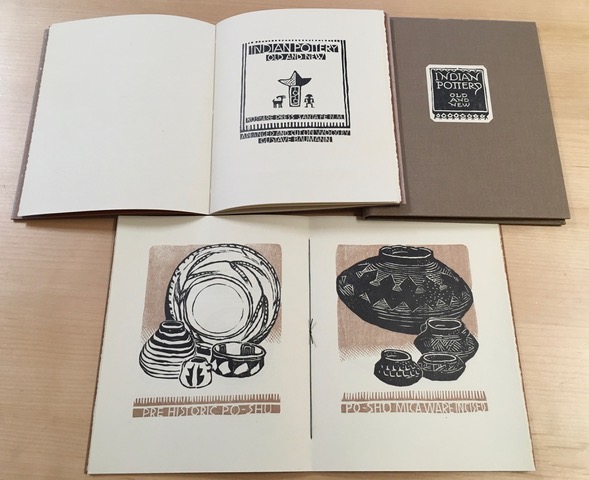
Renovation of the Palace Press, including the addition of a new permanent exhibit recreating famed artist Gustave Baumann’s original printing studio

BaumannStudio_edited-1

Opening the exhibit Santa Fe Found: Fragments of Time and hosting a series of lectures on the founding of the city, in honor of its 400th birthday

Comb helmet and breast plate

Moving 3,700 textiles and 10,000 artifacts (including 1,404 pieces of furniture) into new, state-of-the-art collections storage inside the museum

wedding dress 5x4

Acquisition of an 1842 book printed by Padre Antonio José Martínez on the first press in New Mexico, as well as letters written by Billy the Kid to Gov. Lew Wallace

martinez book 300

Winning a $147,000 grant from the Institute for Museum and Library Services to partner with KNME-TV on development and broadcast of history documentaries

covered wagon

Playing host to His Royal highness Prince Felipe of Spain and his wife, Letizia, during a 400th Anniversary event

prince in ctyd

Publication by the Palace Press of Santa Fe Poet Laureate Valerie Martinez’s book, This Is How It Began, commemorating the 400th anniversary

This Is How it Began

Unveiling the commemorative Bill Mauldin stamp with the US Postal Service

unveiling 5x3

“Visitors tell us time and again that they love what we’re doing – and that they want more,” Levine said. “Our goal is to continue bringing forward even more of the stories that shaped the West, more exhibitions, more lectures, and more ways for people to engage with history and be inspired to explore more of New Mexico.”

A Walk Through Time

May 7th, 2010 by Kate Nelson

Plaza merchants shook their stores from slumber as city workers swept the square, their conversation a melodic Spanish carried by the spring breeze. Huddled in the morning chill, we were walkers from St. Louis, New Jersey, Maine, Florida, New York and Michigan, led by a woman from California who was about to bring aboard a few folks like Napoleon, Willa Cather and a Native American saint.

pat“The Italians did not have tomato sauce,” declared Pat Kuhlhoff. “The Swiss did not make chocolate. And there was never a potato famine in Ireland until Christopher Columbus discovered the Americas.”

With that, Kuhlhoff began one of the downtown Santa Fe historic walking tours she has conducted on behalf of the Palace of the Governors for 17 years. She and other volunteers rotate responsibility for the tours every Monday-through-Saturday fro mid-April through mid-October.

It’s an informal start: Gather at what we museum folks know as “The Blue Gate” – a wooden gate on the east side of Lincoln Avenue that divides the Palace of the Governors from the New Mexico History Museum.

Tours cost $10, last up to two hours (depending on how many questions you ask), don’t require reservations, rarely achieve a pace more strenuous than an amble, and provide a stop for drinking fountains and restrooms. (The museum guides, by the way, do not accept tips.)

Kuhlhoff begins her tour by drawing connections between visitors’ home states and the American Southwest. “All of King George’s Red Coats got their red from Mexico,” she tells an East Coaster. In a way, she’s subverting the standard U.S. educational view of American history, as something that started back East and eventually pioneered its way to a desolate West.

In fact, Kuhlhoff tells her dozen walkers, Santa Fe’s history began some 14,000 years ago with Native peoples who farmed, tamed turkeys and dogs, fought with one another, and then fought with European settlers, before reaching accommodations that led to today’s Southwestern melting pot and its still-distinct ethnic ingredients.

Civil War monumentStanding in the Plaza, Kuhlhoff points to the obelisk commemorating those who died in the so-called Indian wars. She tells of how the word “savage” was chiseled out of its inscription – an oft-told story – but drops in something new: Napoleon saw obelisks used as memorials in Egypt and brought the idea back to France, where it took root and spread.

(We can also thank Napoleon for Southwestern punched-tin decorative arts, Kuhlhoff says. The general decided tin cans were the best way to move goods across long distances. Once goods made it all the way to Santa Fe, throwing away the cans they came in was deemed wasteful, so they were recycled into objects that now typify Santa Fe style.)

Kuhlhoff makes me see, for the first time, the gargoyle heads atop the Catron Block building at Washington and Palace.

She leads us into the Rainbow Man Courtyard on East Palace and points to the office where scientists for the Manhattan Project once learned of their top-secret orders.

palace ave architectureOn the corner of Cathedral and Palace, she compares and contrasts Territorial, Pueblo, Mission and Romanesque architectural styles.

Near the river, she stops at a bed of native plants and deftly IDs yarrow, poppies, aspens – before noting that, just upstream, nuclear secrets were exchanged, a crime that led to the executions of Julius and Ethel Rosenberg.

On the steps of St. Francis Cathedral, she introduces visitors to the statue of Blessed Kateri Tekakwitha, the first female Native American to attain beatification, and tells a bit of the history of Bishop Lamy, noting drily that Willa Cather’s Death Comes for the Archbishop is “not historically accurate, but popular.”

The walk includes information on the railroad era (with a timely restroom break at La Fonda) and on the use of acequias to move the desert’s most precious natural resource: water.

“You’re with these people such a short time and you don’t get to know them, so I try to make it really broad,” Kuhlhoff said afterward. “If you go into too much detail, people don’t have a basic framework.”

Getting that basic framework to them is easier said than done: “With the docent training we get,” Kuhlhoff said, “I could have these people out there for four days.”

Come for the Exhibits … and a Piece of Pie

April 29th, 2010 by Kate Nelson

Across the country, museums are looking for ways to expand visitors’ social experiences as well as become community gathering spots. (Consultant Nina Simon documents the cutting edge in her blog, Museum 2.0.) The History Museum does its part with hands-on exhibits, lectures and performances, and a shady Palace courtyard in the heart of downtown Santa Fe, perfect for a moment of serenity.

On May 20, we’re taking that one step further by offering a place to grab a snack or a light meal, hang out on a second-story terrace with a great view, get a little work done courtesy of our free wi-fi, and re-charge before charging back into the exhibits.

Plaza Cafe archiveThe Plaza Cafe, a Santa Fe Plaza mainstay since 1905, has agreed to run the long-awaited Cowden Café, on the museum’s second floor. The café will serve daily from 10 am until 4:30 pm, and on Friday from 11 am until 7 pm. Service will be “upscale self-service without the attitude,” said Daniel Razatos, whose family has operated the Plaza Café for more than six decades. All menu items will be made from scratch and designed to be quick, healthy and fresh – perfect for people on a one-hour lunch break. Beverages will include premium coffees, teas, beer and wine, creating an opportunity to enjoy not only the exhibits but sunset hors d’oeuvres and, sometimes, live music on the café’s Phyllis and Eddie Gladden Terrace.

“Museums are changing,” said Dr. Frances Levine, director of the museum. “It’s not just about visiting the exhibits, it’s about being comfortable in public spaces and providing amenities to help people feel comfortable. We want our museum to be a place for the community.”

Brothers Andy and Daniel Razatos operate the Plaza Café, founded in 1905 and taken over by Dionysi Razatos in 1947. A longtime favorite among locals, tourists and the occasional celebrity, the restaurant whips up a mix of Greek, New Mexican and down-home American cuisines – everything from moussaka to enchiladas to chicken-fried steak.

CherryPie“The Cowden Café will be like a little café bistro,” said Daniel Razatos. “You come in for a little snack, nothing’s very huge or expensive, and it’s a nice, comfortable atmosphere to hang out and read your newspaper – very European.”

Visitors who only want to go to the café can do so for free; access to the exhibits will remain limited to paid attendees. Up to 20 people can sit inside the café; the outdoor terrace has room for 50 people. The museum is working out the final tweaks to a wi-fi system that will enable members of the public to log on to their computers while visiting the café.

The Cowden Café is named for a historic ranching family, whose holdings at one time straddled the New Mexico-Texas border from Jal to Santa Rosa. Their legacy was detailed in the book Riding for the Brand: 150 Years of Cowden Ranching (University of Oklahoma Press, 2006), by Michael Pettit.

Part of the 1-year-old History Museum’s original design, the café and terrace have been closed to the public while details on the café’s operation were worked out. The state Board of Finance agreed to the contract’s terms on April 20, clearing the way for a final construction push.

Get Into This: Another Award for the Museum

April 28th, 2010 by Kate Nelson

NMHM_Cowboys 4x3

In the months before and after the History Museum opened (May 23, 2009), newspaper readers, radio listeners, TV watchers, Web surfers and billboard hounds were greeted with this message: “History — Get Into It!”

That ad campaign helped produce block-long lines of people patiently waiting to physically get into it on opening weekend and has kept ‘em coming back ever since. (Don’t worry: You no longer have to stand in a block-long line … in the rain … to get in.)

media kit 4x3That campaign just won honors from the American Association of Museums, which gave it two first-place awards in its 2009 Museum Publications Design Competition. The first award was for the media kit (at left), basically a folder stuffed with enough information about all the construction that was going on behind the Palace of the Governors to keep reporters and others intrigued. (Many of those materials are still available here, on the Museum of New Mexico Media Center.)

The second first-placer was for the grand-opening’s marketing and public-relations materials. Gathered around the “History – Get Into It” theme, those materials mixed archival photography with modern-day people. (Go here to see the full campaign and, hey, vote for your favorite. Cowboys? Railroads? Hippies?)

Clearly, the “Get Into It” concept worked: More than 20,000 people lined Lincoln Avenue and packed into galleries during last year’s Memorial Day weekend to be part of the grand opening. As the museum’s first anniversary approaches, attendance has surpassed 150,000, more than doubling the annual attendance of the museum’s predecessor, the Palace of the Governors.

“From the beginning, our marketing team believed two things: First, that New Mexico’s history is not dead, boring or in the past; it is alive, fascinating and all around us. And second, that no one could tell the story better than the home team,” said Shelley Thompson, marketing and outreach director of the New Mexico Department of Cultural Affairs’ Museum Resources Division. “Within our department existed the talent, the creative ability, and most important, the passion to do the job better than anyone else. It took a village in every sense, but a special shout-out goes to David Rohr, Natalie Baca, Cheryle Mitchell and Kate Nelson for excellence in publications, design, advertising and public relations.”

In case you’re wondering: AAM is the premier organization for more than 3,000 museums, including art, history, science, military and youth museums, as well as aquariums, zoos, botanical gardens, arboretums, historic sites and science and technology centers. Here’s a full list of winners. Now, get cracking on voting for your favorite “Get Into It” ad by clicking on comments, below.

History Museum Volunteers Bring Home the Gold

April 19th, 2010 by Kate Nelson

An old saying contends that an army runs on its stomach. But for museums, there’s no running without volunteers.

volunteer award_edited-1Last week, the New Mexico History Museum’s many volunteers were honored with a prestigious award by the Governor’s Commission for Community Volunteerism. The Governor’s Nonprofit Program Award recognized the museum’s 112 volunteers who last year donated 9,342 hours of unpaid service.

The award was given during a banquet at the Hilton Hotel in Albuquerque, where an estimated 600 volunteers and program staff represented efforts that ranged from foster grandparents to combating homelessness, addictions and teen pregnancy. Lt. Governor Diane Denish, co-chair of the commission, said that volunteer efforts in New Mexico last year accounted for $1 billion worth of work that might not otherwise have gotten done.

Patricia Hewitt of the museum’s Fray Angélico Chávez History Library nominated the volunteers. From her nomination:

(They) conduct tours of the Palace of the Governors, assist hundreds of school groups from throughout New Mexico, man our Information Desk, lead informative historic walking tours of downtown Santa Fe, act as Gallery Guides for the new 26,000-square-foot exhibits space, and answer “wayfinding” questions throughout the Museum’s campus.  Our volunteers assisted at every major 2009 History Museum event including Opening weekend, Spanish Colonial Days, Gem and Mineral Show, Mountain Man Rendezvous, Native American Artisans Indian Market Celebration, Christmas at the Palace, Las Posadas, and new exhibit openings and lectures.  They provide the personal touch that insures that visitors from youngsters to senior citizens have a welcoming and memorable museum experience.

Our volunteers who work behind the scenes at the Museum assist staff with archival processing and arrangement of photographic and manuscript collections to aid in proper housing and storage of fragile materials, and to assist with access and research.  Volunteers in the Museum’s Collections department helped to successfully move over 12,000 museum objects, including 3,706 costumes, accessories and textiles, into our new environmentally sound 8,381-square-foot storage vault.  As staff perform curatorial, administrative, and archival duties for our collections and exhibits they greatly appreciate the many talented volunteers who assist “backstage” at the Museum.

john and tricia_edited-1John Ramsay accepted a last-minute invitation from Patricia to attend the event and said it was just another never-know-what-to-expect day in the life of a volunteer. For the last 14 years, Ramsay has volunteered at the History Library, most of that time “in the bowels” of archived documents. While helping with cataloguing and such, he’s honed an interest in Southwest history deep enough to lead him to contribute a chapter to a book that will be published by UNM Press this fall.

“I’ve always been interested in history, and I’m a Southwesterner, really,” said Ramsay, who’s a retired chemist from Los Alamos National Laboratory. “I got involved back when Tom Chavez was there and got to see original documents about New Mexico history. It’s just intriguing.”

Ramsay also serves as treasurer of the New Mexico Historical Society and says that tending to such interests is part of keeping active.

“You’ve got to have an interest in what you’re doing,” he said. “Whether it’s volunteering for the handicapped or some of the things these other people you see here do. I like what I’m doing because I just find a satisfaction out of it.”

The History Museum applauds every one of its volunteers for the sacrifices they’ve made to make us a better institution. To us, this award simply confirms what we’ve long known: We can’t do it alone. Whether it’s meeting new people or working with old photographs, sharing your knowledge of the past or getting out the word on new exhibits, the History Museum can help you expand your horizons. For information on our volunteer programs, contact David Rogers at 476-5157.

« Previous Entries